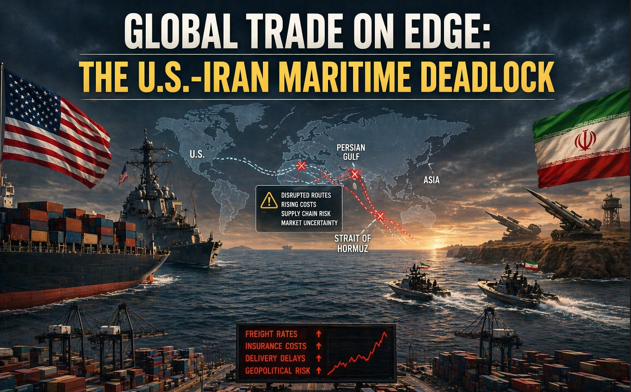
As of late April 2026, the "Economic Fury" sanctions campaign led by the U.S. Treasury has intersected with a near-total blockade of the Strait of Hormuz. This maritime "binary event" has paralyzed the primary artery for 20% of the world’s seaborne oil and liquefied natural gas (LNG), sending shockwaves through every major stock exchange from New York to Tokyo.
The conflict has transformed the Persian Gulf into a "High-Risk Area," triggering standard War Risk Clauses (such as BIMCO’s CONWARTIME) across thousands of charterparty agreements.
Global Economic Impact Points:
Energy Price Surge: Brent crude has fluctuated between $100 and $130 per barrel, with physical oil prices occasionally outpacing futures as refineries scramble for non-Gulf feedstock.
The "Shadow Fleet" Crackdown: U.S. OFAC has expanded sanctions to target over two dozen vessels and front companies allegedly involved in "illicit" petroleum sales, making it nearly impossible for many tankers to secure international P&I (Protection and Indemnity) insurance.
Global Supply Chain Disruption: Beyond oil, the blockade has halted 20–30% of global fertilizer exports (specifically Urea), threatening agricultural output in Europe and Asia for the upcoming 2026 planting season.
Insurance & Freight Surcharges: Maritime insurance premiums have seen a tenfold increase for any vessel operating near the conflict zone, while "Emergency Contingency Surcharges" have added thousands of dollars to the cost of a single container.
The Diplomatic Stalemate:
While a temporary ceasefire was extended on April 22, 2026, the deadlock remains. The U.S. maintains naval restrictions as leverage for regional security concessions, while Iran demands an end to the maritime blockade as a prerequisite for any long-term settlement.
What This Means for Global Importers:
For companies outside the immediate region, the "Hormuz Factor" has introduced a permanent risk premium into the cost of goods. Businesses are now diversifying away from single-route dependencies and investing heavily in "near-shoring" to avoid the volatility of the Middle Eastern corridors.
Outlook:
The International Energy Agency (IEA) describes the current situation as the "greatest global energy security challenge in history." Even with the current ceasefire, the backlog of stranded cargo and the displacement of the global tanker fleet suggest that supply chain stability will not return until at least Q4 2026.