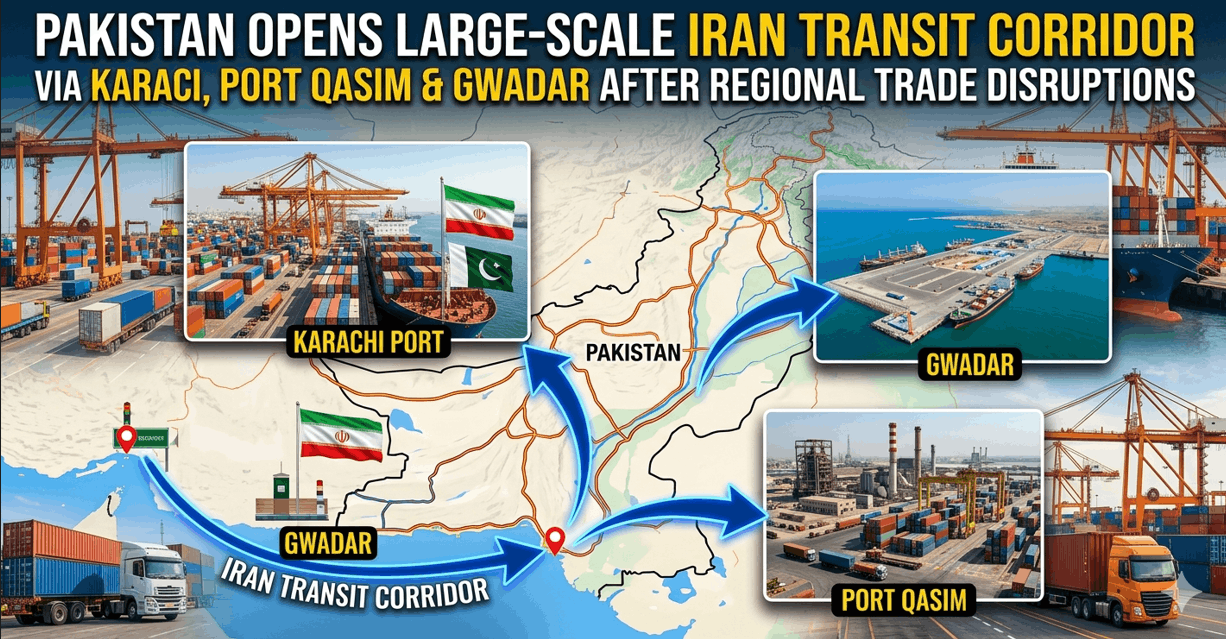
Pakistan has officially introduced a large-scale transit framework allowing Iran-bound and third-country cargo to move through its territory under customs supervision. The new system is expected to reshape regional logistics by creating structured trade corridors connecting Pakistani ports with Iran and surrounding markets.
The framework comes at a time when regional shipping disruptions and geopolitical tensions have forced traders, shipping lines, and logistics companies to explore alternative supply chain routes across South Asia and the Middle East.
Under the newly implemented transit mechanism, cargo can move through major Pakistani gateways including Karachi Port, Port Qasim, and Gwadar Port before crossing into Iran through approved land routes such as Taftan Border, Gabd Border, and the Gwadar–Iran corridor.
The development is being viewed as a major opportunity for freight forwarders, NVOCC operators, transport companies, customs agents, and regional traders seeking faster and more flexible logistics solutions.
Pakistan’s strategic geographic location continues to strengthen its role as a regional trade bridge connecting:
South Asia
Middle East
Central Asia
Western China
Industry experts believe the framework could help reduce dependency on traditional transshipment hubs while improving regional cargo connectivity and trade diversification.
However, all shipments moving under the framework remain subject to customs approvals, transit guarantees, banking compliance, shipping line acceptance, and international sanctions regulations. Cargo involving restricted entities or prohibited commodities will continue to face operational limitations.
With trade routes across the region rapidly evolving, the Pakistan-Iran transit corridor may become one of the most significant regional logistics developments in recent years, especially for businesses seeking alternative and reliable cargo movement solutions.
Contact Vast Gate Trading to explore how this new transit framework can support your regional shipping, freight forwarding, and cross-border logistics requirements.